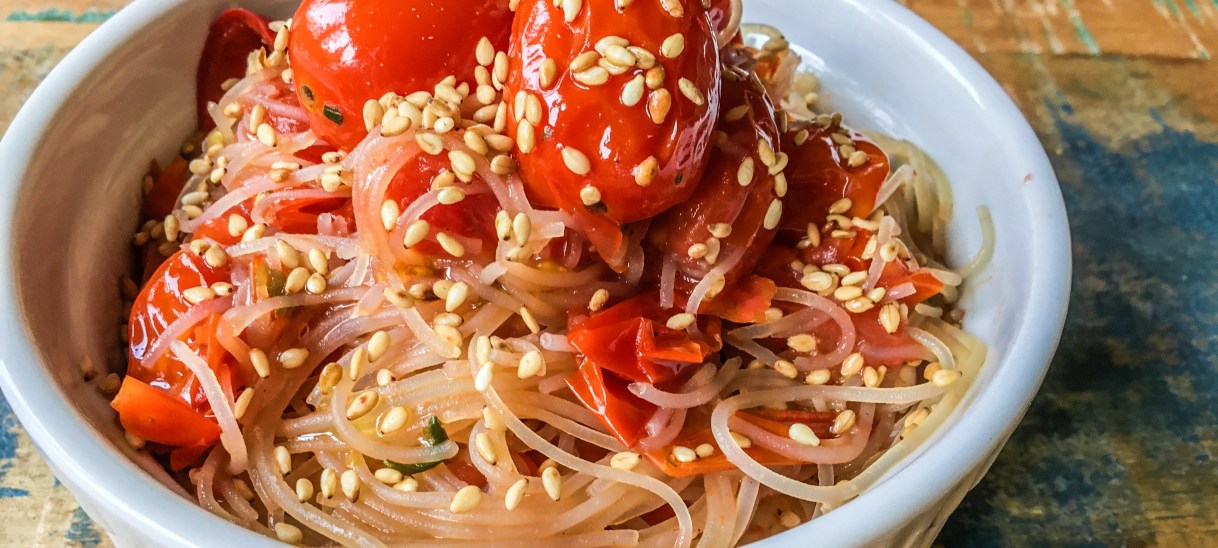
Rice Noodles with Cherry Tomatoes and Chili Oil

Pasta is the noodle of choice in my household, but my family loves a good rice or soba noodle dish at least once a week.   I began cooking more gluten-free noodles at home for myself and my daughter since we seem to have a slight intolerance to gluten.  This  dish combines a few Italian flavors with a few not-so-Italian flavors that I actually like to use regularly.  In addition, I love the cherry tomato/soy combination.

Servings: 4

Ingredients

Instructions

  1. Rinse the rice noodles in a bowl of cold water to remove the extra starch. 
  2. Bring a large pot of salted water to a boil.
  3. Add the noodles and allow to boil for about 4-5 minutes, so that the noodles are still al dente. The amount of time you allow them to boil will vary slightly by brand. When draining the noodles, reserve about 1/2 cup of the water.
  4. Meanwhile, heat the olive oil in a large skillet over medium heat.  Add the garlic and stir gently until it’s soft and golden, about 2-3 minutes.  Add the sliced chili; cook and stir gently, until softened for about 1 minute.  
  5. Add the cherry tomatoes, soy sauce, and ¼ cup of the hot noodle water and stir together for an additional minute.   
  6. Add the drained noodles to the skillet, and toss to coat with the sauce.  Add the pistachios (or other nuts) and season with additional salt if needed. 
  7. Turn off the heat and add freshly torn basil leaves.   
  8. Serve in medium size deep bowls.  Drizzle with a little extra virgin olive oil and if desired, black sesame seeds.

CHEF IT UP: To make this dish extra creamy and full of flavor (but without the soy sauce), remove basil leaves from two sprigs of basil and blanch them right before you start the dish.   Using a regular or immersion blender, mix the blanched basil leaves with ½ cup of cold water and ½ cup of extra virgin olive oil.  Add the mixture right after you cook the cherry tomatoes, disregard the soy sauce, and proceed with the remaining instructions. 

Homemade Ricotta

I used to make house-made ricotta daily at Felidia, and sometimes would make it on weekends with my daughter at home.  I love it on toasted bread with some seasonal fruit for a late breakfast.  I also like to serve it as a snack before dinner, or I’ll add a dollop to certain pastas and soups for some added freshness. For the best results, use organic dairy.

Servings: Makes 2-3 cups

Ingredients

  • 2 quarts whole milk
  • 1 cup heavy cream
  • ½ cup buttermilk
  • ½ teaspoon kosher salt
  • 3 tablespoons freshly squeezed lemon juice.

Instructions

  1. Line a large sieve with a double layer of damp cheesecloth. Set it over a bowl. 
  2. Add the dairy and salt to a medium heavy-bottomed saucepan over medium heat. Slowly bring the mixture to a boil.  
  3. Add the lemon juice, and reduce the heat to the low.  Begin to stir your ricotta mixture gently for two minutes until the mixture begins to curdle.
  4. Remove from heat, and let the ricotta sit without stirring for an additional 5 minutes.
  5. Pour the mixture through the cheesecloth, and let it drain for 30 minutes. The homemade ricotta is what you have left in the cheesecloth. 
  6. Chill until ready to use.

Note:  Homemade ricotta is delicious for breakfast, but I enjoy it anytime of day. Try adding a dollop of freshly made ricotta to a spicy tomato sauce or a spring vegetable soup for a little extra flavor and freshness.

Basil Spread

Servings: 4-6

Ingredients

  • Kosher Salt
  • 4 cups packed fresh basil leaves
  • 1 cup packed fresh parsley leaves
  • ¼ cup pine nuts, toasted (slivered almonds would also work)
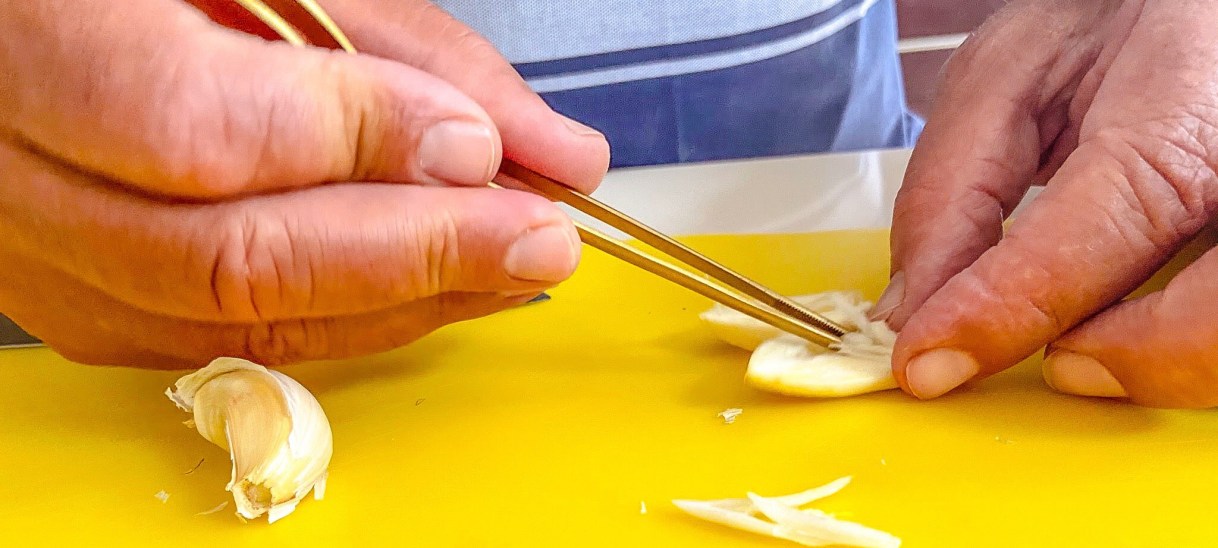
  • 1 large clove garlic, crushed and peeled
  • ½ cup extra virgin olive oil
  • One 15 ½ ounce can cannellini beans, rinsed and drained
  • ⅓ cup freshly grated Parmigiano Reggiano or Grana Padano

Instructions

  1. Bring a large saucepan of salted water to a boil.  Add the basil and blanch until bright green and wilted, about a minute.  Cool in an ice bath, drain, and wring very dry.
  2. Place the basil, parsley, pine nuts, garlic, and a large pinch of salt in the work bowl of a food processor.  Pulse to make a chunky pasta. 
  3. With the processor running, add the oil in a steady stream to make a thick sauce. 
  4. Add the beans, and process to make a smooth bright green puree.  Sprinkle in the grated cheese, and pulse to incorporate. 
  5. Serve at room temperature.

Recipe Adapted from Felidia:  Recipes from My Flagship Restaurant (By Lidia Bastianich, Fortunato Nicotra, Tanya Bastianich Manuali; Alfred A. Knopf, 2019)

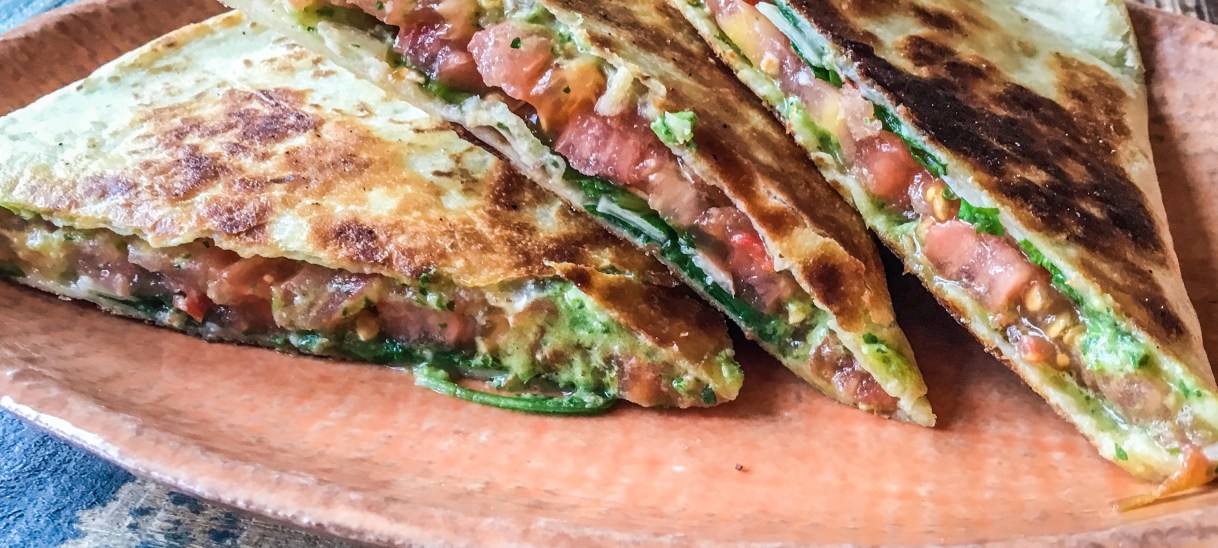
Hummus Quesadillas

Quesadillas are not typically Italian, but I like a good quesadilla-style sandwich for lunch on weekends.  My daughter started eating hummus in high school, so I started feeding her my version of hummus, a basil and white bean puree.    And why the chickpea tortilla?  I love that it’s gluten free, but I also grew up eating panelle (chickpea fritters) in Sicily. It’s a little nostalgia in every bite.  

Servings: 4

Ingredients

  • 1 cup of Basil Spread (or store-bought hummus)
  • Four 8-inch chickpea tortillas (regular or whole wheat tortillas can also be used)
  • ½ cup of arugula (you can use Italian arugula, rocket arugula, sylvetta arugula or kale)
  • 2-3 beefsteak tomatoes, sliced
  • ½ cup of toasted almonds (optional)
  • 12 slices of medium tofu (optional)
  • 2 tablespoons olive oil or vegetable oil to brush the pan

Instructions

  1.  Spread the Basil Spread (or hummus) over half of each tortilla. Lightly cover with equal amounts of arugula and tomato slices.  (If you’d like, add the almonds and/or tofu for a little extra protein.)
  2. Fold the blank half of the tortilla over to create a half-moon shape.
  3. Brush a non-stick skillet with the olive oil oil or vegetable oil, and preheat over medium heat.
  4. Place the folded quesadilla in the pan.  With the palm of your hand, press lightly to make sure it’s adhering to the pan.  Cook until the bottom is lightly golden and crisp.  Carefully flip and cook the other side. (You can also use a grill pan to toast your quesadillas.)
  5. Transfer the quesadilla to a cutting board, and finish cooking the remaining quesadillas.  Allow each quesadilla to rest for a couple of minutes before cutting into three wedges with a chef’s knife or pizza cutter .  Serve immediately. 

Nutella Crepes

Servings: 6

Ingredients

For the crepes:

  • 2 large eggs
  • 1 cup all purpose flour
  • 2 cups milk
  • 1/2 teaspoon salt
  • Finely grated zest of 1 lemon or lime
  • 2 tablespoons unsalted butter, melted and cooled slightly + 2 tablespoons of cold butter for the pan

For the filling:

  • 12 tablespoons nutella
  • 1 tablespoon crushed hazelnuts (optional)
  • 1-2 scoops of vanilla ice cream

Instructions

  1. Whisk together the eggs, flour, milk, salt, and lemon zest in a large bowl until well blended and smooth. Make sure there are no lumps from the flour.
  2. Drizzle in the melted butter and whisk until the batter has thickened. It should have the consistency of melted ice cream.
  3. Set a crepe pan or medium nonstick skillet over medium-high heat until it is hot.  Butter the pan with your cold butter and immediately ladle in a ½ cup of the batter. Tilt and swirl the pan so the batter coats the bottom, and set the pan on the burner.
  4. Lower the heat to medium, and cook the crepe for a little less than a minute, until the underside is lightly browned in a lacy pattern.  Flip it over with a spatula, and continue to let it cook for ½ minute or longer, until the second side is lightly browned, then remove it to a warm platter.  Keep in mind that sometimes the first crepe cooks a little bit unevenly or becomes too brown along the edges. It gets easier as you continue and temper the pan.
  5. Heat the empty pan briefly, then butter it again. Repeat the process and ladle in another 1/2 cup of the batter to make another crepe. Repeat the sequence, stacking up the finished crepes on the platter, until all the batter is used up.

To Serve:

Fill and serve the crepes as soon as possible, while they are fresh and warm. Take one crepe off the stack, and place it with its lacy-patterned side down.  Spoon a generous 2 tablespoons of nutella in the center of the pancake and spread it over the surface, leaving an inch-wide border.  If you want to “chef it up”, scatter a spoonful of chopped hazelnuts over the chocolate layer for some added texture. Then fold the round in half, hiding the filling, and fold again into a plump quarter-round.  Fill and fold all the crepes the same way. Serve each crepe with a scoop or two of vanilla ice cream.  

Feel free to experiment with different fillings like fruit jams, melted chocolate or even a combination of peanut butter & jelly.

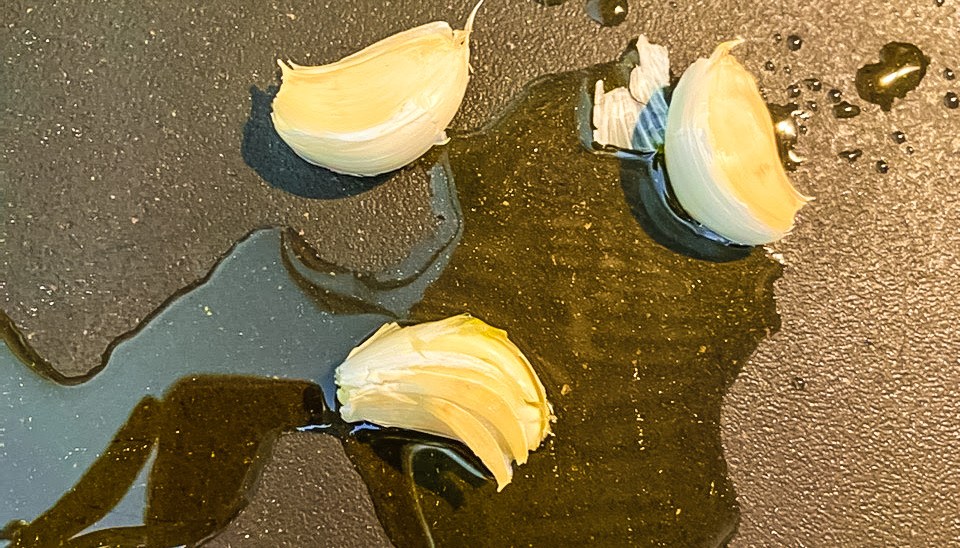
How to Saute Garlic

Be sure to add enough olive oil to almost coat the entire pan, and turn to low to medium heat.  Once the pan begins to get hot, add the garlic slowly and lower the heat if it begins to cook too quickly. 

It is important to cook garlic so that it’s golden.  Once it begins to turn brown, an unpleasant bitter taste is released.

How to Cook Pasta

General Cooking Instructions

  1. Bring large pot of salted water to boil.
  2. Do not break the pasta
  3. Cook the pasta until very al dente, which is about 2-3 minutes earlier than what the package reads for cooking time.
  4. Remove the pasta with a slotted spoon, Chinese spider, or tongs – depending on the shape of the pasta – and add to your pan of sauce and cook for the additional 2 minutes, stirring so the pasta is coated.  You can add a ladle of hot pasta water to adjust the consistency and taste of the sauce. 
  5. Turn off the heat and add the grated cheese and any fresh herbs called for in the recipe.
  6. Serve HOT!

Pasta and Noodles 101

Salting Your Pasta/Noodle Water:  My general rule for salting pasta water is to add 1 to 1 ½ tablespoon of kosher salt to 6 quarts of water in a large pot. If you use iodized salt, use less.

Cooking Rice Noodles: Rice noodles are more delicate than the wheat pasta that I ate as a small child, but I love them!   To cook rice noodles, bring 3-4 quarts of water to a boil in a  6-8 quarter pan over high heat.  I rinse the rice noodles first in a bowl of cold water and then add them to the pot.  Add the rice noodles and stir to separate.  Cook until barely tender to the bite for about 2- 3 minutes.  Drain and use immediately.

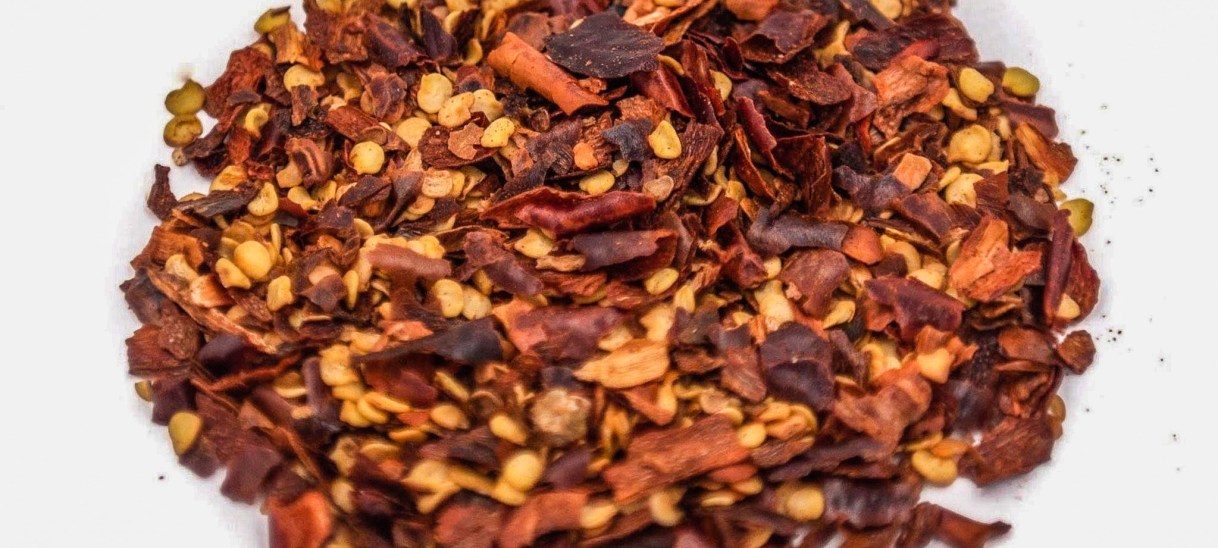
Peperoncino

Peperoncino refers to several thin-walled, medium sized hot peppers used often in Italian cooking.   They are grown in the Calabria region of southern Italy, and the pepper is fruitier and spicier than a typical red chili. 

The peperoncino flakes are easy to find and keep well in the spice rack and are added to certain Italian dishes to add heat and flavor.  You can also find the powdered versions in some specialty shops which tend to be quite spicy.  In Calabria, it is typical to add this ingredient to many of their local dishes.

Olive Oil

Olive oil is Italy’s liquid gold.  I suggest keeping two olive oils in the house – a lower quality, less expensive olive oil for cooking and a special extra virgin olive oil that you can use to dress salads, finish your soups, pastas, main courses and more. 

Remember that extra virgin olive oils will vary from region to region.  When you begin to find your favorite, remember that stronger, more piquant olive oils work better drizzled on meat while lighter, more delicate oils will complement your seafood and lighter vegetable dishes. When you saute or pan fry a delicate meat or fish, I often opt for a good quality vegetable or canola oil.