Long, Dried Pasta

For the simplest of pasta preparations – pasta with garlic and oil, pasta with tomato sauce, and pasta with pesto – I like to suggest a long, dried pasta like spaghetti, spaghettini, linguine, or bucatini.  All of these shapes are relatively easy to find in most grocery stores.

Look for 100 percent semolina; imported Italian pasta is more likely to give you the best quality.  Stay away from shiny, blotchy, cracked, broken pasta or pasta with white specks.

Garlic

Garlic is a must in my kitchen.  I love to crush my garlic; it is the easiest and quickest way to prepare it.  Crushed garlic releases a mild flavor over a long period of time.  However, if you prefer a stronger flavor, you can certainly slice it or mince it.  

When buying garlic, look for a tight, compact head of cloves.  The garlic should not be soft, and the cloves should not be too brown or look like they are breaking apart.  Garlic will stay good for up to two months, but you should store it in a dark, cool place.  Once you break the clove from the head when cooking, the garlic cloves will last 1-2 weeks.

Pasta With Garlic and Oil

Spaghetti with Garlic and Oil has very few ingredients, is simple to make, but does take practice to master.  A good spaghetti with garlic and oil is a great weeknight dinner, weekend lunch or even late night dinner after entertaining with friends and family.  

The typical pasta with garlic and oil is made with long pasta like spaghetti and uses only olive oil, garlic, and peperoncino or hot chili flakes.  To build on the flavor, you can add toasted breadcrumbs or grated Grana Padano or Parmigiano Reggiano at the end; I sometimes like to add chopped basil and/or chopped parsley to either of these combinations.   

Servings: 6

Ingredients

  • Kosher salt
  • ⅓ cup extra virgin olive oil
  • 8 cloves garlic, crushed, and skin removed
  • 1 pound spaghetti or other long pasta like linguine or bucatini
  • ¼ teaspoon peperoncino flakes (red pepper flakes), or more to taste
  • 1 cup freshly grated Parmigiano Reggiano or Grana Padano OR ¾ cup of toasted breadcrumbs (optional)
  • ¼ cup chopped fresh Italian parsley (optional)
  • ½ cup freshly grated Parmigiano Reggiano or Grana Padano (optional)

Instructions

  1. Bring a large pot of salted water to a boil for the pasta. 
  2. In the meantime, in a medium-large skillet, heat the olive oil over medium-low heat.  Add the garlic and cook, making sure it does not burn, until softened and pale golden- about 3 to 4 minutes.   
  3. While the garlic is cooking, add the pasta to the boiling water and give it a stir.  Add the peperoncino to the garlic and oil and let toast for a minute. Then add 2 cups of the pasta water to the pan and bring the sauce to a rapid boil.  Season with a little additional salt and peperoncino.  
  4. Once the sauce has reduced by about half and the pasta is al dente, remove the pasta from the boiling water with tongs and add it to the sauce.  If you choose to add parsley, add it now and stir.  Otherwise, turn off the heat, add the toasted breadcrumbs or grated cheese and stir with the tongs.  You can also add the fresh basil and stir if you choose to use it.  Add a final drizzle of extra virgin olive oil, plate the pasta and serve immediately.  

CHEF IT UP:  Once you have mastered this this simple pasta dish, I suggest doing the following for an even more delicious, creamier sauce. After you begin cooking the pasta, ladle 1 cup of the pasta cooking water into a blender, add the garlic and oil from the saute pan and half of the grated cheese.  Blend until smooth, add parsley, then blend again and pour into a large skillet.  Then once your pasta is al dente, remove it with tongs to the skillet.  Turn off the fire, sprinkle with remaining cheese and toss to coat the pasta in the sauce.  If the pasta sauce seems dry, you can add another ladle of pasta water.  Plate and serve immediately.

To serve:

When the pasta is al dente, remove with tongs to the skillet.  Sprinkle with the remaining cheese.  Toss to coat the pasta in the sauce, adding a little more of the pasta cooking water if it seems dry.  When plating, use the tongs to twirl the pasta into the shape of a bird’s nest into the shallow bowl to help keep it warmer.  (You can also do this with a large serving fork and ladle). 

Picking Kitchen Knives

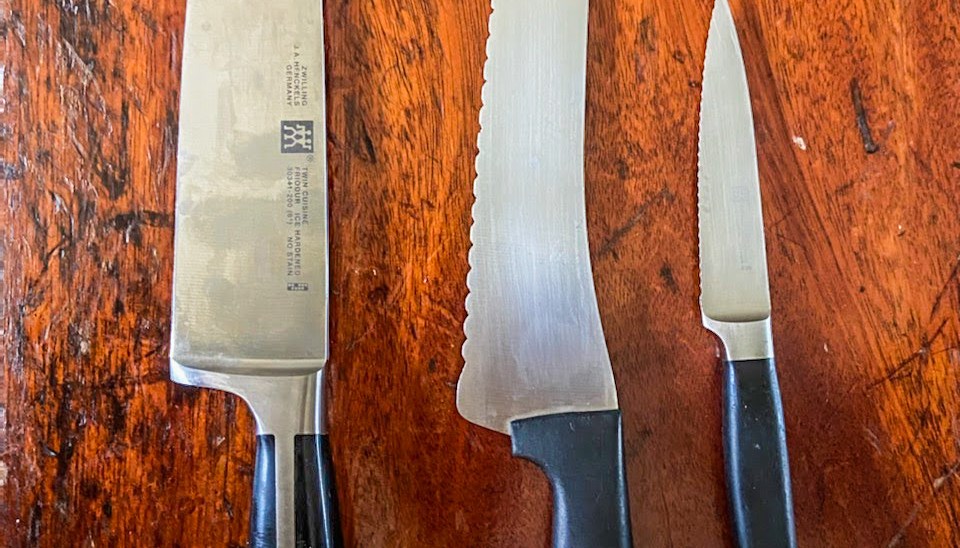
I believe that there are three knives that you must have in the kitchen:  a chef’s knife, a paring knife, and a serrated knife.

A chef’s knife has a wide blade between 6 and 10 inches long and is used mostly for chopping.  A paring knife looks like a mini-chef’s knife; the blade is between two and four inches long.  It’s ideal for peeling onions, slicing vegetables, and even cutting small vegetables and filleting small fish.  I use a serrated knife for cutting bread, tomatoes, meat, and citrus.

How to Crush Garlic

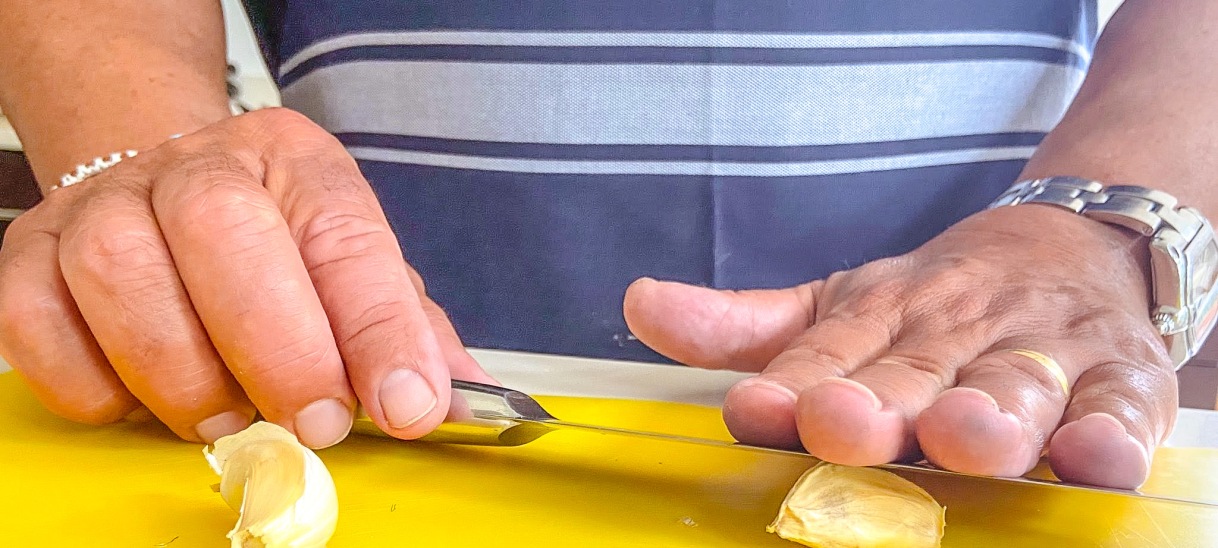
Simply place a clove of garlic under the palm of your  hand and crush it.  It might hurt a little, but some cooks prefer this method.  You don’t even need to remove the skin.

You can also take a chef’s knife and place the blade flat on the clove with the sharp side facing away from you.  Use the heel of your hand to press the blade down on the clove.